The anthem we sing every 31 August was, until 1957, a state song from Perak.
And the date that gives us our public holiday was proposed not by a politician, but by a religious scholar from Kepala Batas, Penang.
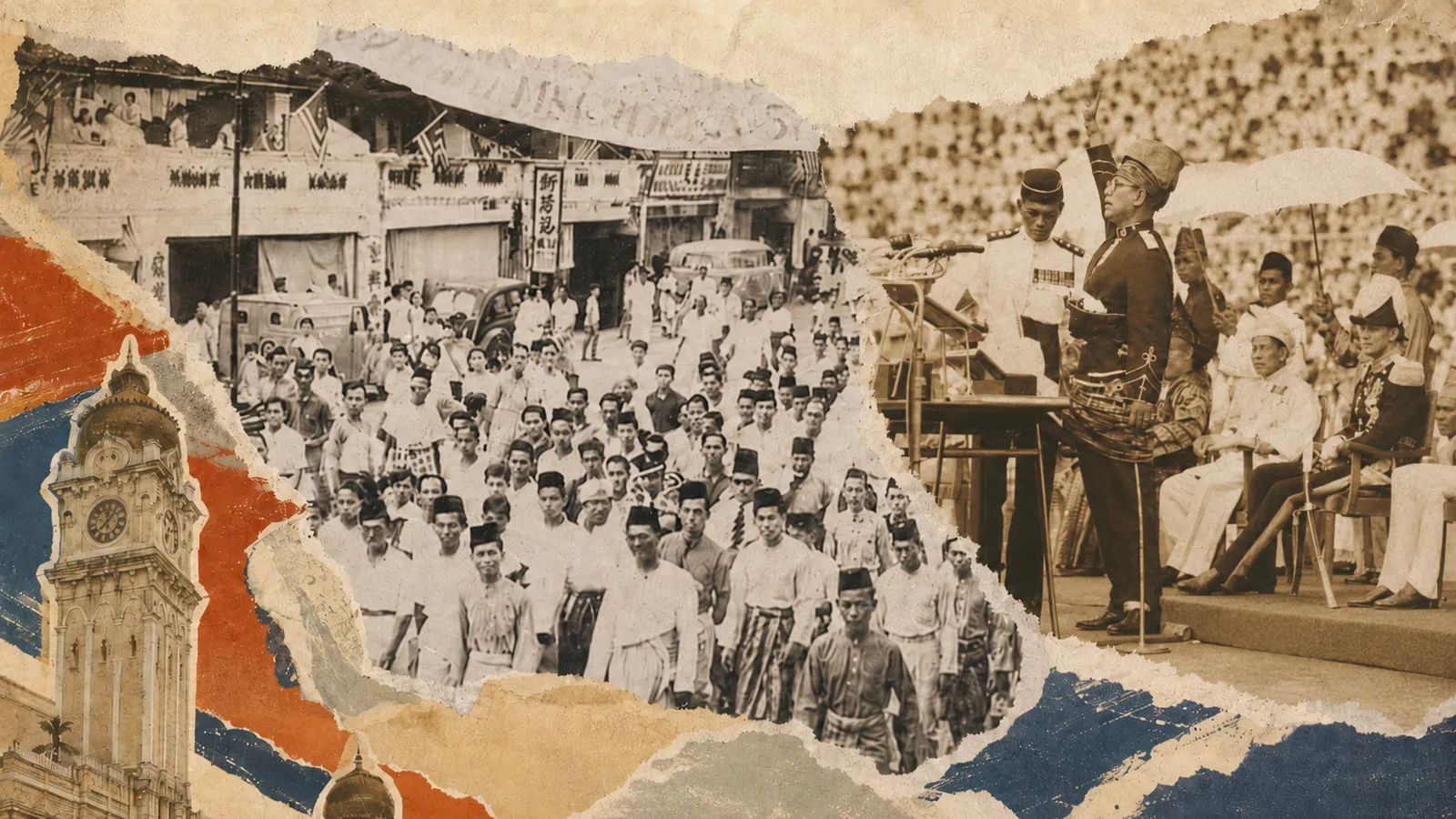
Merdeka was never one day or one man's story. It was assembled across 16 places over nearly a century. Here's every state's part in it.
Part 1: Before Anyone Said "Merdeka"
Sixty years before 1957, resistance was already under way in the kampung, not for independence as an idea, but over land and tax.
Pahang
During the Pahang resistance of 1891–1895, Mat Kilau and his allies cut British telegraph lines to disrupt colonial communication in the interior.
Kelantan
In 1915, Tok Janggut led a resistance movement against British taxes and colonial administration in Kelantan.
Terengganu
In 1928, Haji Abdul Rahman Limbong rallied farmers against British land regulations and taxes that burdened rural communities.
Part 2: The Road to 1957
Kedah
Tunku Abdul Rahman was born into the Kedah royal family in Alor Setar in 1903, son of Sultan Abdul Hamid Halim Shah.
Before becoming Malaysia's Father of Independence, he served in the Kedah civil service.
Johor
On 11 May 1946, UMNO was founded at Istana Besar Johor in Johor Bahru, uniting Malay organisations that had opposed the Malayan Union.
Penang
Tunku Abdul Rahman consulted Sheikh Abdullah Fahim, a religious scholar from Kepala Batas, on a suitable date for independence.
Sheikh Abdullah Fahim recommended 31 August 1957.
Melaka
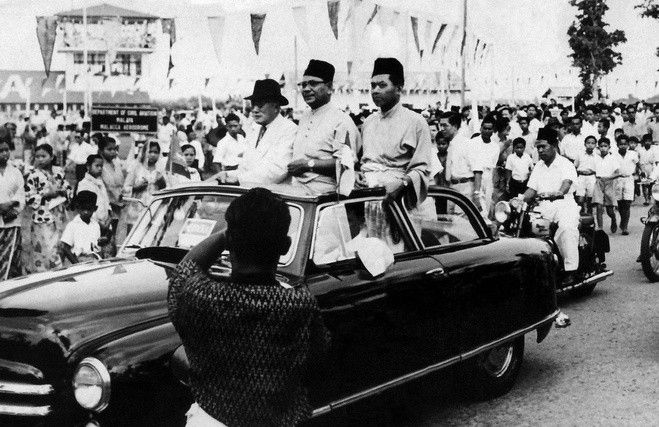
On 20 February 1956, thousands gathered at Padang Bandar Hilir, Melaka, to welcome Tunku and the independence delegation home from London, where the 31 August 1957 date was announced publicly for the first time.
Perak
Ahead of 1957, the melody of Perak's state anthem, "Allah Lanjutkan Usia Sultan," was chosen as the basis for the new national anthem.
With new lyrics, it became Negaraku.
Selangor
At midnight on 30–31 August 1957, the Union Jack was lowered for the final time at the Selangor Club Padang, now Dataran Merdeka.
Later, the flag of the Federation of Malaya was raised in its place.
Kuala Lumpur
Stadium Merdeka was completed just 10 days before 31 August 1957.
That morning, in front of more than 20,000 people, Tunku Abdul Rahman shouted "Merdeka!" seven times.
Negeri Sembilan
Tuanku Abdul Rahman, Yang di-Pertuan Besar of Negeri Sembilan, became the first Yang di-Pertuan Agong of the Federation of Malaya in 1957, launching the country's rotating constitutional monarchy.
Perlis
Tuanku Syed Putra of Perlis became the third Yang di-Pertuan Agong in 1960, appointed after the death of Sultan Hisamuddin Alam Shah of Selangor.
Putting another Malay ruler at the head of the young nation within three years of independence.
Part 3: 1963, the Country Gets Bigger
For Sabah and Sarawak, 31 August is not their independence date and their histories deserve to be told on their own terms.
Sabah
On 31 August 1963, North Borneo began governing its own internal affairs.
On 16 September 1963, it joined Malaya, Sarawak and Singapore to form Malaysia, becoming Sabah.
Today, 31 August is separately commemorated as Sabah Day.
Sarawak
Sarawak began self-government on 22 July 1963 — 56 days before the formation of Malaysia.
That date is now marked as Sarawak Day.
Part 4: Completing the Map
The country's shape kept changing after 1963.
Labuan
Labuan became part of Malaysia in 1963 through Sabah. On 16 April 1984, it became Malaysia's second Federal Territory, after Kuala Lumpur.
Putrajaya
Putrajaya officially became Malaysia's third Federal Territory on 1 February 2001.
Today, most federal ministries and agencies operate from there.