
💡 Sambil baca, sambil belajar: perkataan yang bergaris oren boleh di-hover atau ditekan untuk maksud dalam English
Long before Malaya gained independence in 1957, women were already organising, speaking at rallies and taking part in anti-colonial politics.
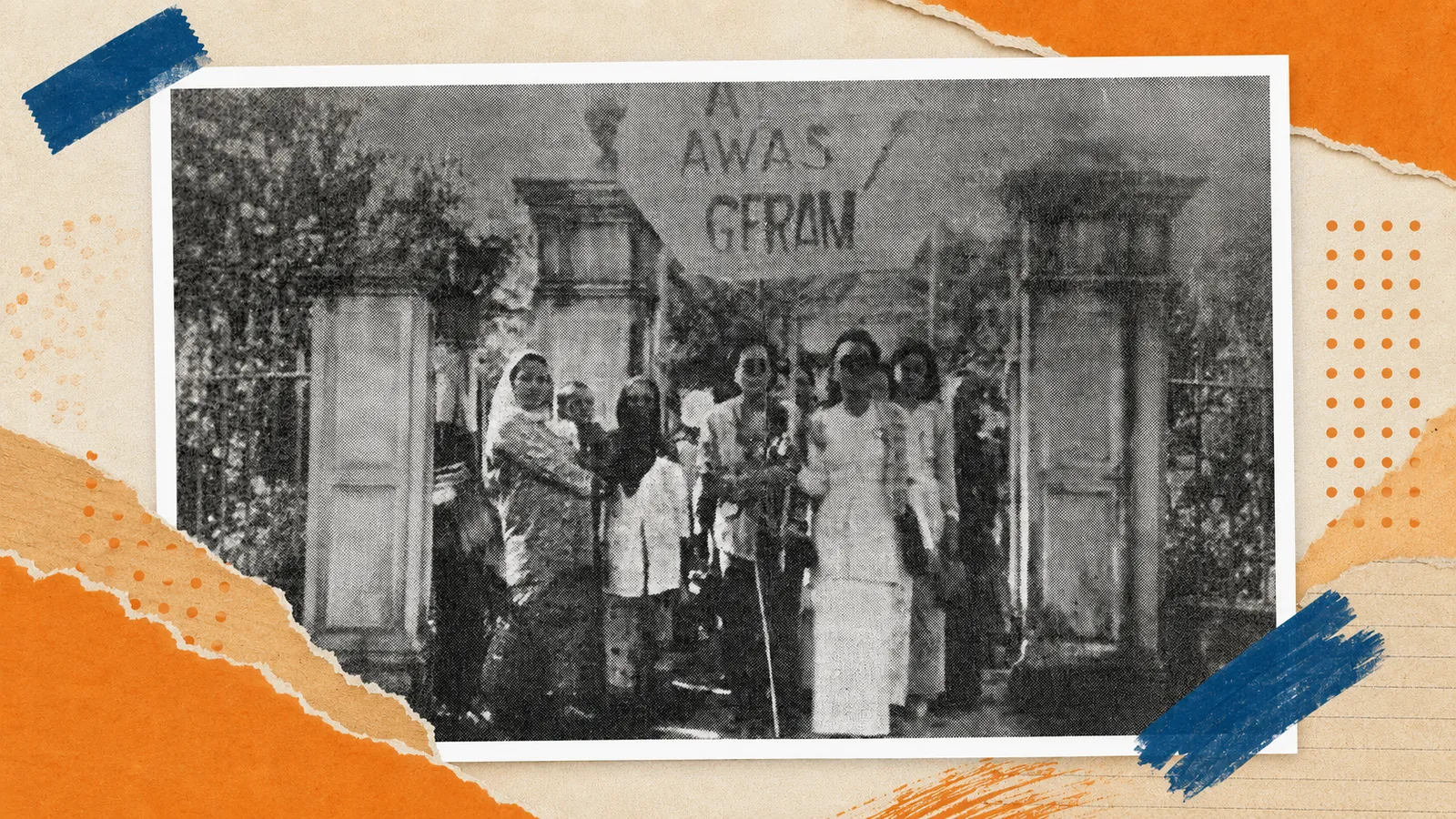
One of the most important groups was Angkatan Wanita Sedar (AWAS), widely described as Malaya’s first nationalist EN: Nationalist someone who strongly supports independence and pride for their own nation, especially against colonial or foreign rule. BM: Nasionalis women’s organisation.
Here are five things you need to know about AWAS!
1. AWAS Grew Out of the Malay Nationalist Party
AWAS was formally established in 1946, growing out of the women’s section of Parti Kebangsaan Melayu Malaya (PKMM).
It soon developed into an organised political movement that mobilised women to take part in anti-colonial activism and the wider struggle for political representation in Malaya.
2. Its Name Had Links To Indonesia’s Women’s Movement
The name Angkatan Wanita Sedar carried a political meaning of its own.
The name was inspired by the spirit of Angkatan Pemuda Insaf (API), PKMM’s youth wing, and also drew from Isteri Sedar, an Indonesian women’s movement from the 1930s that opposed Dutch colonial rule and encouraged women to become more politically active.
Even the acronym AWAS was powerful, “awas” in Malay can mean beware or watch out, giving the organisation’s name an unmistakably defiant edge.
3. Aishah Ghani, Sakinah Junid And Shamsiah Fakeh Were Key Figures
Three names closely associated with AWAS were Aishah Ghani, Sakinah Junid and Shamsiah Fakeh.
Aishah Ghani initially led PKMM’s women’s section, before Shamsiah Fakeh took over when AWAS was formally established in 1946.
Sakinah Junid later emerged as another prominent figure in the movement.
At its height, AWAS is estimated to have attracted around 2,000 members, an impressive figure for a women-led political organisation in 1940s Malaya.
4. Its Members Took Their Politics To The Streets
AWAS was not limited to speeches and meetings.
Members led by Sakinah Junid took part in a roughly six-mile protest march after the British authorities restricted the use of motor vehicles in political processions.
In February 1947, AWAS also became part of PUTERA (Pusat Tenaga Rakyat), a coalition of left-wing Malay organisations.
PUTERA later worked with the All-Malaya Council of Joint Action (AMCJA) in a broader multi-ethnic coalition that opposed British constitutional proposals and backed the major 1947 Hartal, or general shutdown.
5. AWAS Was Banned In 1948
AWAS was banned in 1948, as British authorities intensified their crackdown on radical and left-wing organisations around the start of the Malayan Emergency.
After that, its former leaders took very different political paths.
Shamsiah Fakeh continued her anti-colonial struggle and later spent several years abroad, including in China.
Aishah Ghani, meanwhile, joined UMNO in 1949 and went on to become Malaya’s first female senator in 1962, taking her oath in the Senate in 1962.