
We hear peribahasa everywhere whether in school essays, speeches and even everyday conversations.
But many Malay proverbs aren't simply clever phrases created to sound wise, they come from things people could actually see, experience and understand in everyday life.
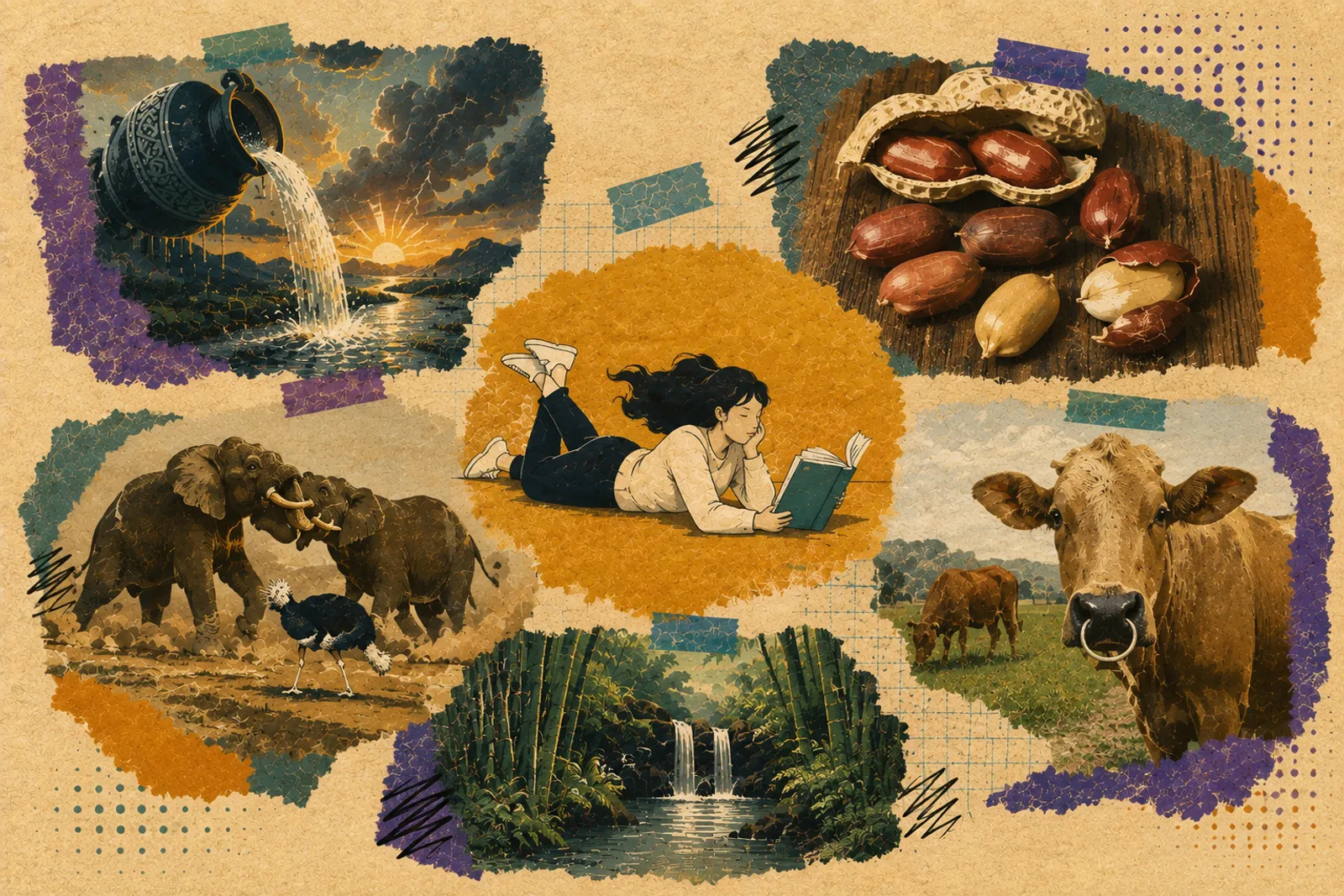
From bamboo growing beside rivers to farmers handling buffalo and families storing water in earthen jars.
Once you know the world behind the words, these familiar proverbs suddenly become much more interesting.
1. Bagai Aur Dengan Tebing
Meaning: Two people who depend on, support and help each other.
The story behind it: Aur means bamboo, while tebing means riverbank. The pairing comes from a relationship that can actually be observed in nature.
Bamboo often grows along riverbanks, where its roots can help hold soil together. At the same time, the riverbank provides the ground and moisture the bamboo needs to grow.
So when Malaysians say two people are bagai aur dengan tebing, they're describing more than friendship.
It's about two sides that strengthen and support each other.
2. Kacang Lupakan Kulit
Meaning: Someone who forgets their origins or the people who helped them after becoming successful.
The story behind it: The metaphor is surprisingly straightforward.
The kulit protects the kacang as it develops. But once the nut is ready, the shell is removed and discarded.
That's why the proverb works so well, the thing that once protected the peanut is suddenly forgotten once it is no longer needed.
It's essentially a warning against forgetting the people, places or circumstances that helped you get where you are.
3. Harapkan Guruh Di Langit, Air Di Tempayan Dicurahkan
Meaning: Giving up something certain while chasing something that isn't guaranteed.
The story behind it: Imagine life before piped water, when storing water at home was essential.
A tempayan, a large traditional earthen jar could hold water for everyday use. Then you hear thunder.
Thunder might mean rain is coming. But might is the important word.
Pouring out the water you already have because you expect rain that hasn't arrived would be a terrible gamble.
That's the logic behind the proverb which is don't throw away what you already have just because you're hoping for something better.
In modern terms? Don't quit the job you have because of a job offer that hasn't actually been confirmed.
4. Seperti Kerbau Dicucuk Hidung
Meaning: Someone who follows instructions blindly without questioning them.
The story behind it: The proverb comes from traditional buffalo handling.
Kerbau (water buffalo) are large and powerful animals, but traditionally they could be guided using a rope attached through the nose. A small amount of force could determine the animal's direction.
That contrast is what gives the proverb its punch. A huge animal, controlled by something as small as a rope.
So when someone is described as seperti kerbau dicucuk hidung, the criticism isn't simply that they're obedient, it's that they're allowing someone else to completely control their actions.
5. Gajah Berjuang Sama Gajah, Pelanduk Mati Di Tengah-Tengah
Meaning: When powerful people fight, ordinary people caught in the middle often suffer the consequences.
The story behind it: The proverb creates a dramatic contrast between two animals familiar to the Malay world.
The gajah (elephant) represents enormous power. The pelanduk (mouse-deer), meanwhile, is tiny by comparison and famously appears in Malay folklore as the clever Sang Kancil.
Put them together and the message is immediate, when two elephants fight, a small animal standing between them doesn't stand much of a chance.
The proverb has survived because its message remains relevant far beyond the forest, when the powerful clash, it is often those with the least power who pay the price.
So, Malay peribahasa aren't just phrases we memorise to score marks in essays. They're tiny records of how people once understood the world around them.
How they farmed, stored water, handled animals and observed nature, snd that's what makes them worth remembering.
Behind almost every familiar proverb is a story. You just have to look a little closer.