
💡 Learn as you read: Hover over or tap the orange-underlined words to see their meaning!
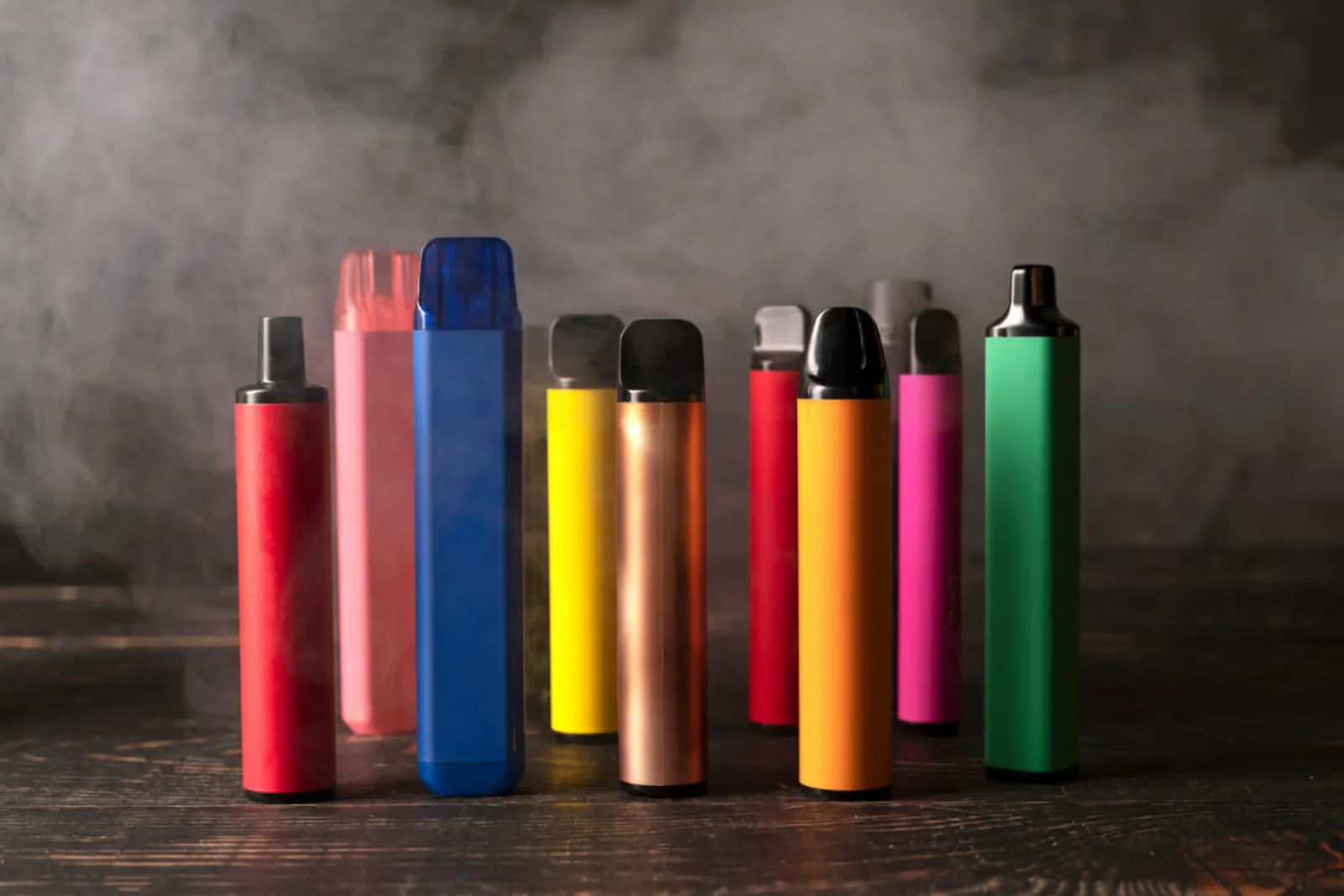
Mango ice. Grape. Bubblegum.
Vapes come in flavours that sound like sweets. But the flavour name tells you very little about what you're breathing in.
On 20 June 2026, Health Minister Datuk Seri Dr Dzulkefly Ahmad said police seizure data up to April recorded 402 cases involving vape devices and liquids mixed with dangerous synthetic drugs.
That does not mean every vape contains illegal drugs but it highlights a problem users cannot detect from the packaging alone.
Even without illegal drugs, vape aerosol can contain nicotine, metals and other harmful chemicals.
So, what actually goes into a vape and what comes out when you take a puff?
1. It starts with four common ingredients
Vape liquid usually contains a mixture of four ingredients, although formulas vary and not every liquid contains nicotine.
- Propylene glycol (PG) carries flavour and contributes to the sensation at the back of the throat.
- Vegetable glycerin (VG) is a thick liquid that helps produce the visible cloud.
- Nicotine is the highly addictive EN: addictive Able to cause dependence, making something difficult to stop using. BM: boleh menyebabkan ketagihan substance also found in cigarettes. And the flavourings give the liquid its fruit, mint or dessert taste.
Think of PG and VG as the base, flavourings as the taste, and nicotine as the ingredient that can keep users coming back.
But an ingredient being suitable for food does not automatically make it safe to inhale.
Your lungs process substances differently from your digestive system.
2. Heating the liquid changes what you breathe in
A vape uses a battery-powered heating element to turn liquid into an aerosol EN: aerosol Tiny liquid droplets or solid particles suspended in air. BM: titisan cecair atau zarah pepejal halus terampai di udara : tiny droplets and particles suspended in air.
That cloud is not simply harmless water vapour.
Heating can produce new chemicals, while components inside the device can contribute metals to the aerosol.
UK regulatory guidance specifically flags substances such as formaldehyde and metals as concerns manufacturers need to assess.
A 2024 investigation commissioned by the New Straits Times, involving 17 vape liquids, reported finding:
- Aldehydes, including formaldehyde and acetaldehyde.
- Metals, including nickel, chromium, cadmium and lead.
- Tobacco-specific nitrosamines (TSNAs), including the cancer-causing compounds NNN and NNK.
The report said formaldehyde and nickel exceeded the exposure benchmarks used in the analysis.
However, this was a limited sample, not a test of every vape sold in Malaysia.
The amount of harmful substances released can vary with the device, liquid and how the vape is used.
3. Refillable vapes raise another concern
Some vapes use pre-filled pods. Others let users add liquid themselves.
A closed system uses a pre-filled pod or cartridge not designed for refilling, so the liquid comes supplied inside the pod.
But pre-filled does not mean harmless, and it does not guarantee authentic contents.
An open system has a tank or pod the user can refill, with the liquid added separately by the user.
That refilling creates an additional opportunity to add unknown substances.
The distinction matters because refillable devices can be used to deliver substances beyond standard nicotine liquid.
On 6 January 2026, Dzulkefly said the Health Ministry was targeting a vape ban beginning with open systems, citing their misuse with synthetic drugs.
4. "Magic Mushroom" is not an ingredient list
Names such as "Piu Piu" and "Magic Mushroom" may sound like specific substances.
But police have described them as commercial names used to market synthetic liquid drugs for vape devices.
The name alone does not establish what chemical is inside.
In an April 2026 operation, police reported seizing 18.55kg of liquid suspected to contain furanyl fentanyl, a synthetic opioid.
The word "suspected" matters: the reported weight refers to the seized liquid, not necessarily pure furanyl fentanyl.
A familiar flavour or convincing label is no substitute for knowing a product's actual contents.
5. Would a ban solve the problem?
Health authorities have pointed to drug- laced EN: laced Mixed with another substance, especially a drug, sometimes without the user knowing. BM: dicampur dengan bahan lain, terutama dadah vape seizures as a reason for stronger restrictions.
Dzulkefly described the 402 recorded cases as a strong basis for a ban.
Critics question whether a total ban would stop demand.
In October 2025, MP Teresa Kok warned that a blanket ban could encourage smuggling and expand the black market.
She proposed targeting open-system vapes instead.
The debate is about which approach would work best: a wider ban, targeted restrictions or tighter regulation and enforcement.
Meanwhile, two risks should not be confused: the health risks of ordinary vape aerosol, and the additional risks of liquids containing illicit drugs.
Vape aerosol generally contains fewer harmful chemicals than cigarette smoke, but that does not make it safe.
For adults who smoke, any potential benefit depends on switching completely rather than using both products.
Think About It
A flavour label tells you what a vape is supposed to taste like. It does not tell you everything you may inhale.
Who should bear the greatest responsibility for making that information reliable: manufacturers, sellers or regulators?
And how should Malaysia tackle drug-laced liquids without overlooking the risks of ordinary vaping?