
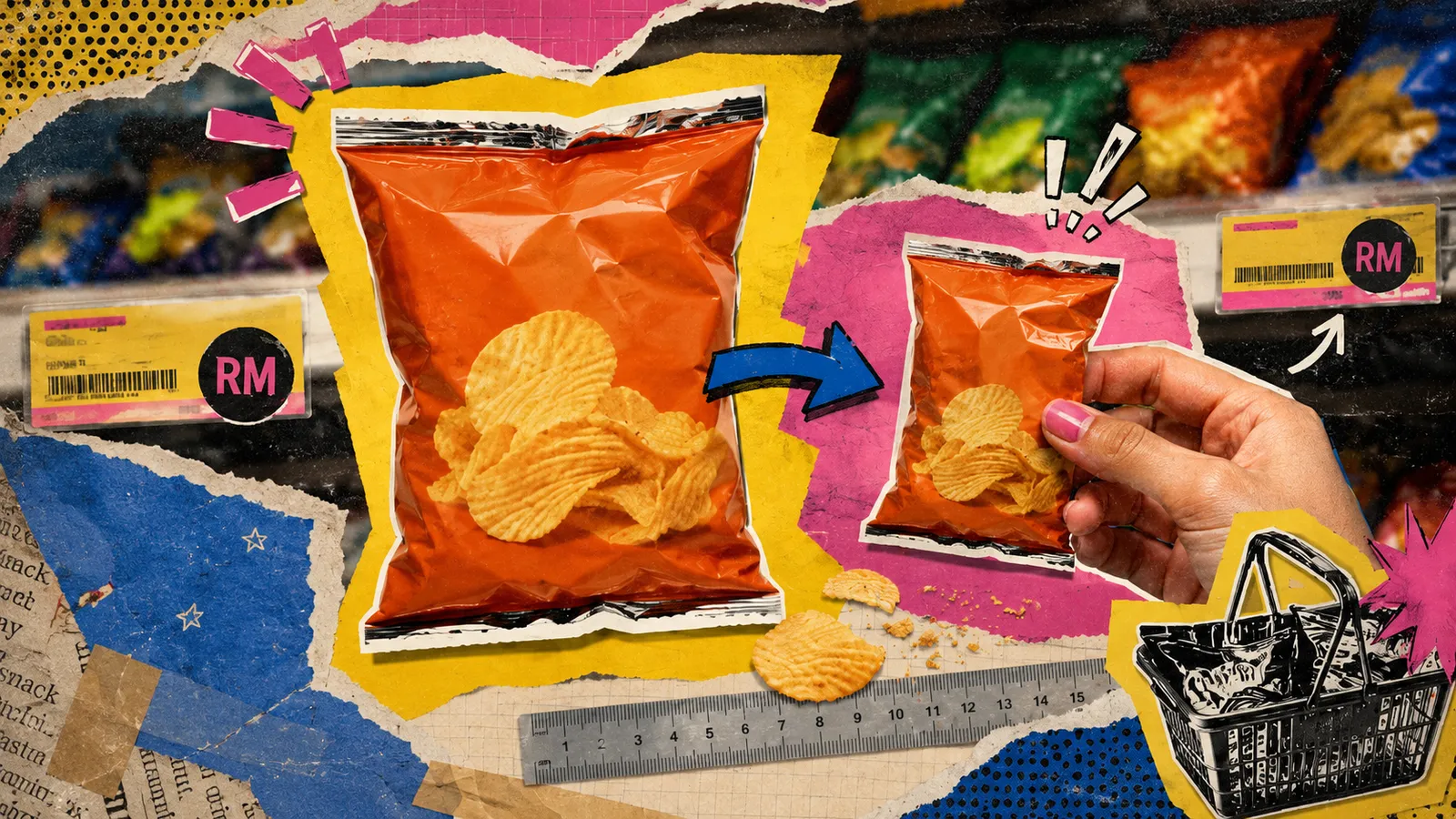
Ever opened a packet of your go-to snack and thought, “Wasn’t this bigger before?”
That feeling might not be entirely in your head.
This phenomenon is known as shrinkflation, when manufacturers reduce the size, weight or quantity of a product while keeping its selling price unchanged.
The result? The price on the shelf looks the same, but the actual cost per gram or unit has gone up.
So, how does it happen without consumers noticing and why has it become increasingly common?
1. Less Weight, Same Price
One of the easiest ways to spot shrinkflation is by checking a product’s net weight.
For example, a product that used to contain 500 gram (g) may be reduced to 450g while still being sold at the same price.
A 50g difference might not seem significant. But when it happens across the products you buy every week, those small reductions can add up.
That’s why it’s worth looking beyond the price tag. Check how much product you’re actually getting for the price you pay.
2. Why Not Just Raise the Price?
There’s a reason companies may choose to reduce the quantity instead of simply increasing the price.
Consumers tend to notice price increases more easily than small changes in product size or quantity.
If your usual RM5 snack suddenly costs RM5.50, the difference is immediately visible on the shelf.
But if the price stays at RM5 while the contents are reduced slightly, many consumers may not notice, especially when the changes happen gradually.
For businesses, this can be one way of managing rising production costs without making the increase as obvious to consumers.
3. The Packaging Can Play a Part Too
Have you ever noticed a product that looks bigger or premium, only to discover that its weight has actually changed?
Packaging can influence how we perceive the size of a product.
A taller, slimmer packet, for example, may still look substantial even if it contains less than it used to.
So, don’t judge a product by the size of its packaging alone.
Check the label for details such as net weight, number of pieces or volume.
4. It’s Not Just Snacks…Food Portions Can Change Too
Shrinkflation isn’t limited to products on supermarket shelves.
It can also happen with food sold at restaurants, cafés and other eateries, when portion sizes become smaller while menu prices remain the same.
Maybe the piece of chicken is slightly smaller. The fries don’t fill the box quite as much.
Or your drink seems to have a little less in it.
Individually, these changes may seem minor. But over time, consumers may end up paying the same price for less.
5. Meet ‘Skimpflation’
There’s another term worth knowing which is skimpflation.
While shrinkflation means you get less of a product for the same price, skimpflation refers to a reduction in the quality or value of a product or service, often as businesses try to cut costs.
For example, manufacturers may switch to cheaper ingredients, reduce certain components or change a product’s formulation.
In services, it could mean fewer options, longer waiting times or a lower level of service than before, while the price remains unchanged.
3 Words To Learn!
1. Net weight: The weight of a product’s contents, excluding its packaging.
2. Perceive: To notice, recognise or form an impression of something.
3. Portion: The amount of food served to one person.