
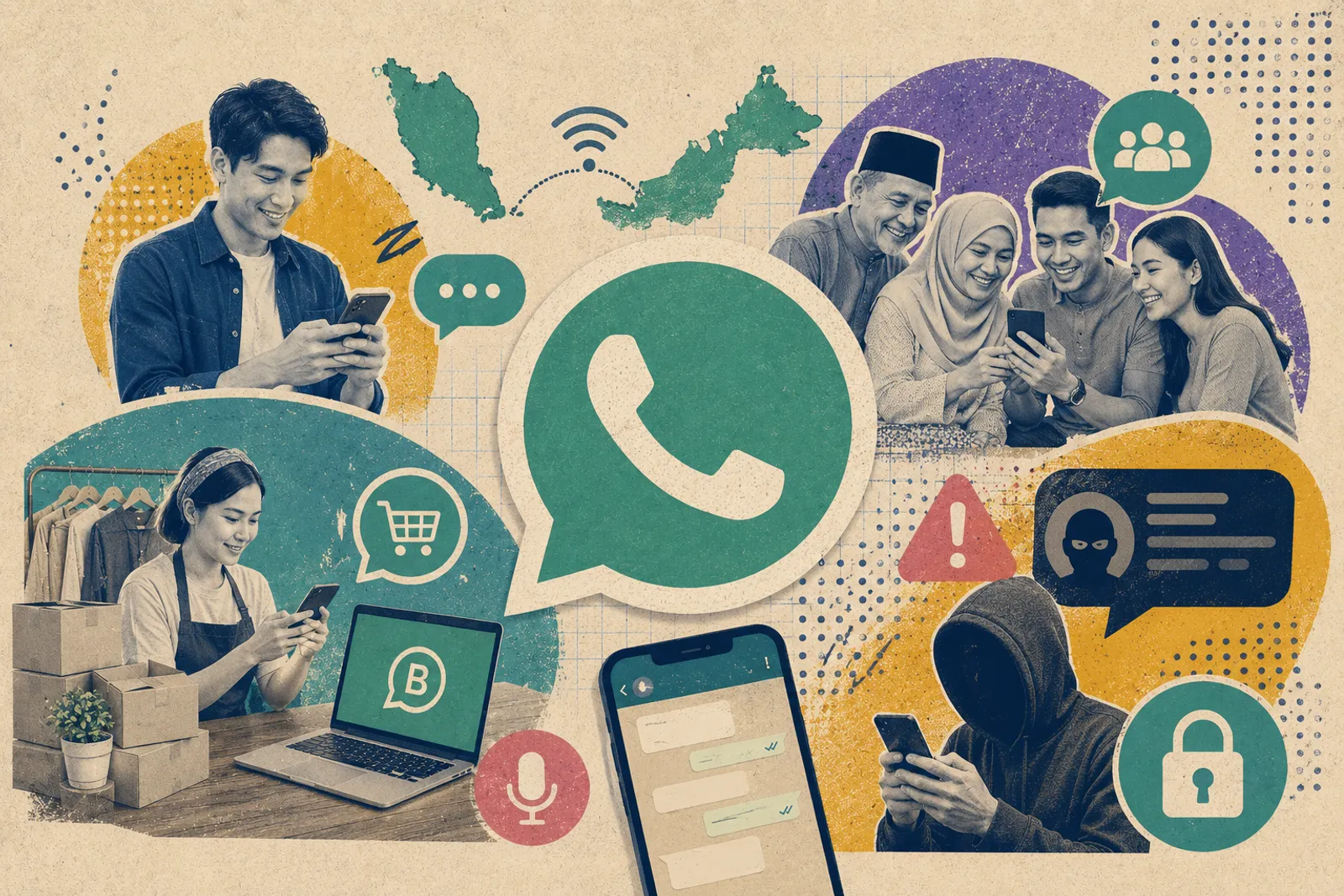
Think about the last time you made an actual phone call versus sent a WhatsApp message. For most Malaysians, that's not even a close comparison anymore.
Here's how one app quietly rewired the way an entire country talks to each other.
It Became the Default Way Malaysians Communicate
WhatsApp isn't just popular in Malaysia, it's dominant. As of 2026, WhatsApp holds an 80.1% market share among messaging apps, with 90.7% of Malaysian internet users opening it every single month.
That's higher usage than most social media platforms, even though WhatsApp is often counted separately from "social media" in formal statistics.
Malaysia's internet penetration itself hit 98.3% in 2025, meaning nearly the entire population is online and the overwhelming majority of that daily communication now happens through one app.
It Quietly Became the Backbone of Small Business in Malaysia
Ask any hawker stall, home baker, or small online seller how customers reach them, and the answer is almost always WhatsApp.
WhatsApp Business now functions as the primary customer service channel for countless Malaysian businesses.
This includes handling enquiries, sending order updates, managing broadcast lists for promotions, and even running full product catalogues, all without needing a separate app or website.
For many small vendors, WhatsApp isn't a nice-to-have marketing tool, it's effectively their entire storefront.
Family Life Now Runs Through Group Chats
Before WhatsApp, coordinating a family gathering meant a chain of phone calls or SMS messages.
Now, it's a single family group chat, used for everything from planning Raya visits to sharing forwarded messages (accurate or not) to simply keeping tabs on everyone's day.
WhatsApp groups have become something closer to a digital extended family living room than a simple messaging feature.
Your Phone Number Is Optional
One of WhatsApp's more recent global rollouts, usernames is starting to change something fundamental about how Malaysians connect.
You may no longer need to share your actual phone number just to be reachable on WhatsApp.
This is a genuine shift in digital privacy norms, especially relevant in a country where phone numbers have long doubled as a default form of personal identification when meeting new people or doing business online.
It Also Became a Favourite Tool for Scammers
The same qualities that make WhatsApp so convenient which is direct, personal, trusted are exactly what scammers exploit.
Impersonation scams from fake bank officers and delivery alerts to messages claiming to be from a “long-lost relative” often target WhatsApp because the platform feels more personal and immediate than email or an unknown phone call.
That convenience comes with a downside as WhatsApp became the go-to platform for everyday communication, it also became a favourite hunting ground for scammers.
3 Words of the Day
1. Dominant — having the most influence, power, or control in a particular area.
Example: "WhatsApp is the dominant messaging app in Malaysia, far ahead of its competitors.
2. Impersonation — pretending to be someone else, often to deceive or defraud.
Example: "Impersonation scams on WhatsApp often pretend to be bank officers or delivery services
3. Backbone — the central or most important part of a system that supports everything else.
Example: "WhatsApp has become the backbone of customer communication for small Malaysian businesses.
.